Quick Answer: A solid TPMS light usually means the system has detected that one or more tires may be underinflated. Check the pressure in all four tires when they are cold, then inflate them to the pressure on the driver-side door-jamb label—not the maximum printed on the tire.
Check all four tires
Park on level ground and check pressure before driving, or after the car has been parked for several hours. Heat from driving can raise the reading, so a warm tire may appear properly inflated even when its cold pressure is low.
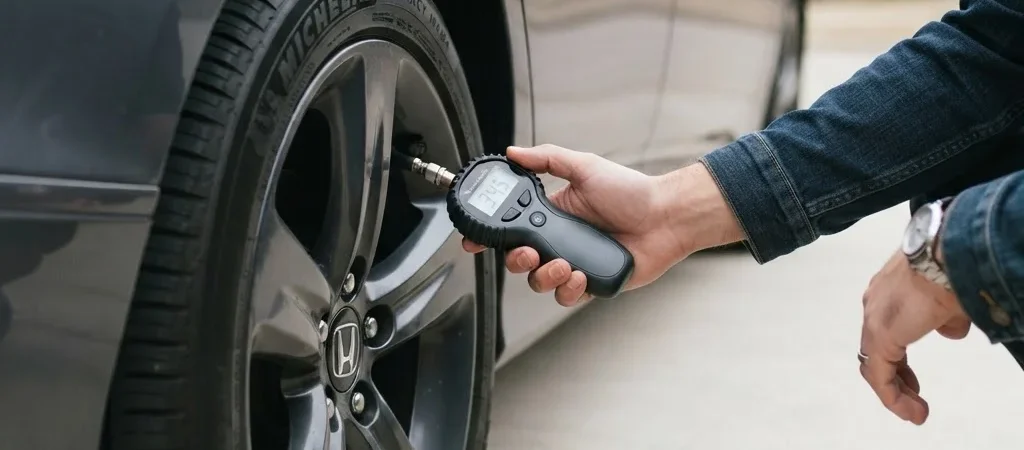
Use a reliable tire-pressure gauge on each tire, including the spare if your vehicle monitors it. The correct pressure is typically listed on a placard inside the driver’s door; the number on the tire sidewall is a maximum, not the vehicle’s recommended setting.
Inflate and watch the warning
Add air in small amounts and recheck with the gauge until each tire reaches the vehicle’s specified cold pressure. If a tire is visibly damaged, losing air quickly, or far below the recommended pressure, avoid driving on it and arrange help in a safe location.
After correcting the pressure, the light may take a short drive to turn off, or the vehicle may require a manual reset. The timing and reset steps vary by make and model, so check the owner’s manual before using a reset button or dashboard menu.
If the light stays on
Recheck the pressures with cold tires if the warning returns. A slow leak from a nail, a valve-stem leak, or a change in outdoor temperature can bring the pressure down again.
If all tires are at the specified pressure and the warning remains after the drive or reset procedure described in your manual, the system may need inspection. A tire shop or service department can check for a leak and diagnose the TPMS; the warning alone does not identify the cause.