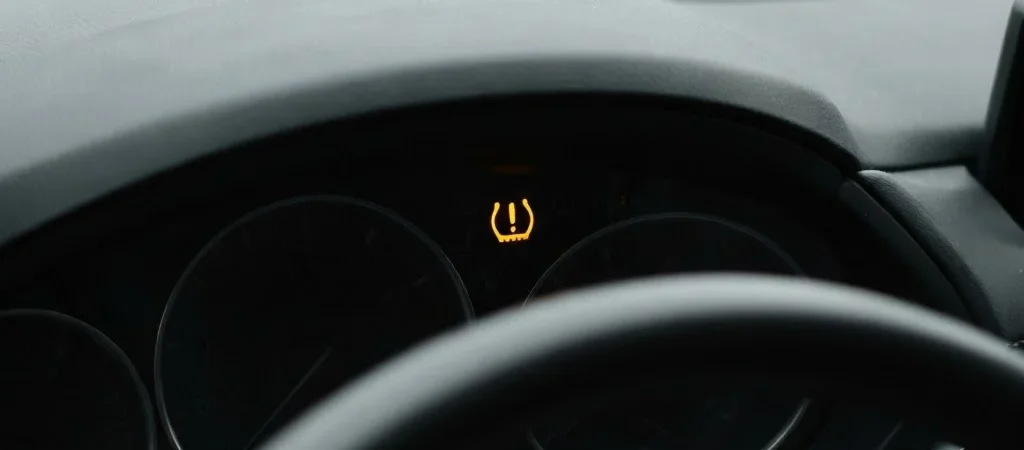
Quick Answer: On many vehicles, a TPMS light that blinks for a short time after startup and then stays on indicates a problem with the tire-pressure monitoring system. Check the tire pressures anyway, because a system warning does not confirm that the tires are properly inflated.
Notice the light pattern
Pay attention to when the warning flashes: at startup, while driving, or after a recent tire change. The exact meaning and flash pattern can vary by vehicle, so compare what you see with the warning-light section of your owner’s manual.
A blinking light is different from a steady low-pressure warning on many models, but the dashboard symbol by itself cannot identify a failed sensor or another specific part. Treat the pattern as a reason to check pressure and investigate the system, not as a diagnosis.
Check pressure before resetting
When the tires are cold, measure all four and compare each reading with the pressure listed on the driver-side door-jamb label. Inflate to that vehicle-specific figure, and look for visible damage or a tire that is losing air.
Do not keep trying a reset procedure to make a blinking warning disappear before checking the cause. Some vehicles have a manual relearn or reset process, while others manage the system automatically; follow the instructions for your specific year and model.
When to arrange service
If the tires are at the correct cold pressure and the light continues to blink, arrange a TPMS inspection. Possible causes can include a sensor or system fault, but a diagnostic check is needed to tell which issue applies.
After tire or wheel work, mention the warning pattern and the service that was performed. A shop can check whether the sensors are communicating and whether the vehicle needs a relearn procedure; ask for the diagnosis before deciding on a repair or replacement.