
Home / Warning Lights / Tire Pressure Sensor
How tire pressure sensors work and why they fail
Last updated: [date] | By the Tire Pressure Light editorial team
Quick Answer
A tire pressure sensor is a small radio transmitter inside or behind each wheel that measures air pressure and sends it to your dashboard. Sensors fail most often because their internal battery wears down over time, usually after roughly five to ten years. A failed sensor typically triggers a steady TPMS light or a service message, and it usually needs a professional scan tool to identify which sensor is at fault.
In this guide
1. What a sensor does • 2. How the signal reaches your dashboard • 3. Battery life and common failure • 4. Diagnosing a faulty sensor • 5. Replacement expectations
Anatomy
What the sensor measures and transmits
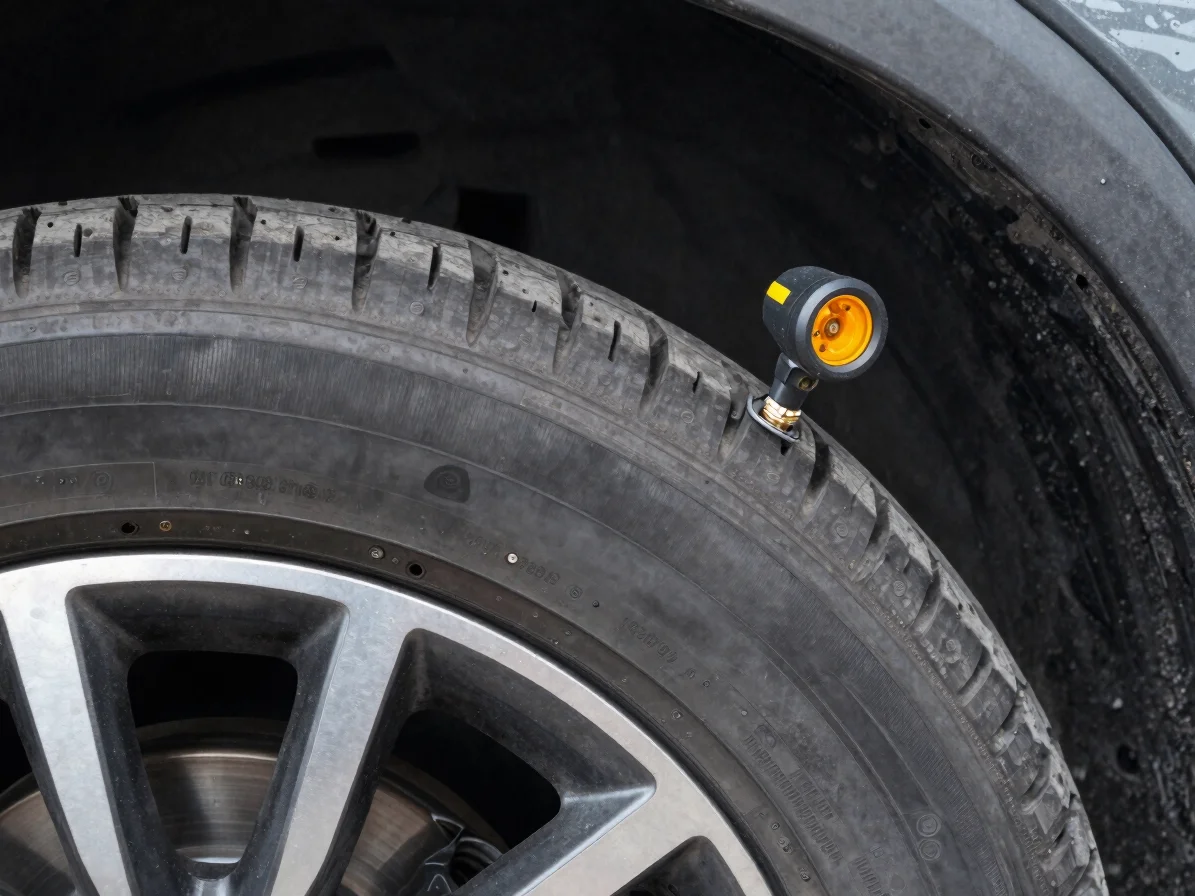
Each sensor sits on the valve stem or inside the wheel assembly. It reads air pressure and, on most vehicles, temperature, then transmits that data by radio to a receiver in the car. The receiver compares each reading against the pressure threshold the system expects.
Because the sensor is sealed and mounted inside the wheel, its transmitter is the component most exposed to heat, road debris, and the slow drain of its own battery.

Signal path
How the signal reaches the dashboard
Sensors transmit their readings by radio signal at set intervals, so the dashboard receives updates even while the car is moving. When a reading falls below the expected level, or when a sensor stops transmitting, the system turns on a warning on the instrument panel.
Battery life
Why battery depletion is the most common failure
Most sensors use a sealed battery that cannot be replaced, so the sensor is often replaced as a whole unit once the battery is depleted. Battery depletion is the most common reason for sensor failure over time, and it usually shows up gradually as the sensor becomes unable to transmit.
Scan tools often read a sensor's signal strength and battery status, which helps separate a failing battery from a physically damaged sensor.
FAQ
How long do tire pressure sensors last, and when do I need a professional scan tool?
Frequently asked question
Most sensors last about five to ten years before their batteries weaken. A professional scan tool is usually needed when the dashboard warning does not clear, when the sensor ID is unknown, or when a specific sensor fault must be identified before replacement. Pressure checks with a gauge should always come first.